
While exploring the state island from our small fishermen boat, the question intrigued me idea of luxury travel and sustainability can co-exist in this paradise.
Sustainability that goes beyond the flawed attempts to offset carbon emissions by planting trees or donating to charity.
It is easy to forget about supply chains, waste management, supply & demand or energy consumption when indulging in luxury far away from everyday responsibilities.
What I learned during this trip is: the Maldives is stepping up on sustainability, cultivating nature’s enchanting beauty while instilling a deep conviction of luxurious experiences throughout the country.

PRESERVING CORAL & MARINE ECOSYSTEMS
In 2015 and 2016 the coral reefs in the Maldives suffered from the phenomenon of coral bleaching, which happens when ocean temperatures are unusually high, and coral expels the algae living in its tissues, turns white and eventually dies. Sixty to ninety percent of coral in the Maldives has been destroyed by bleaching, but it is still possible for the reefs and their ecosystems to recover. This has been bolstered in certain parts of the Maldives by coral conservation projects.
Reefscapers has been involved in coral reef restoration projects in the Maldives since 2005, with its pioneering and ground-breaking coral frame techniques, where corals can grow at a rate of up to 10-15 cm per year. This self-sustaining method of coral propagation is quickly transforming reefs and sandy sea floors into thriving eco-systems, acting as refuge areas for juvenile fish and crustaceans. The coral frames are designed and made on a local island in Baa Atoll. This unique initiative provides employment for several local people and allows them to get involved in marine conservation and tourism activities. Many resorts in the Maldives have also created guest-oriented conservation activities educating visitors on coral rejuvenation, such as snorkelling trails and coral planting.
Several Atols have also stepped up on their marine protection programs in recent years. Bamba Experience for example works with dedicated local partners on the island of Maafushi to offer a complete Maldives Voluntour Island Hopping Adventure. During which you have the chance to help protect the delicate marine environment. You can work towards protecting endangered marine turtle and fish species, beach clean-ups, community education and more. The program brings together tasks like educating local businesses on waste management and hands-on work in the marine environment like conducting reef surveys, cleaning reefs and beaches as well as planting trees and coral.
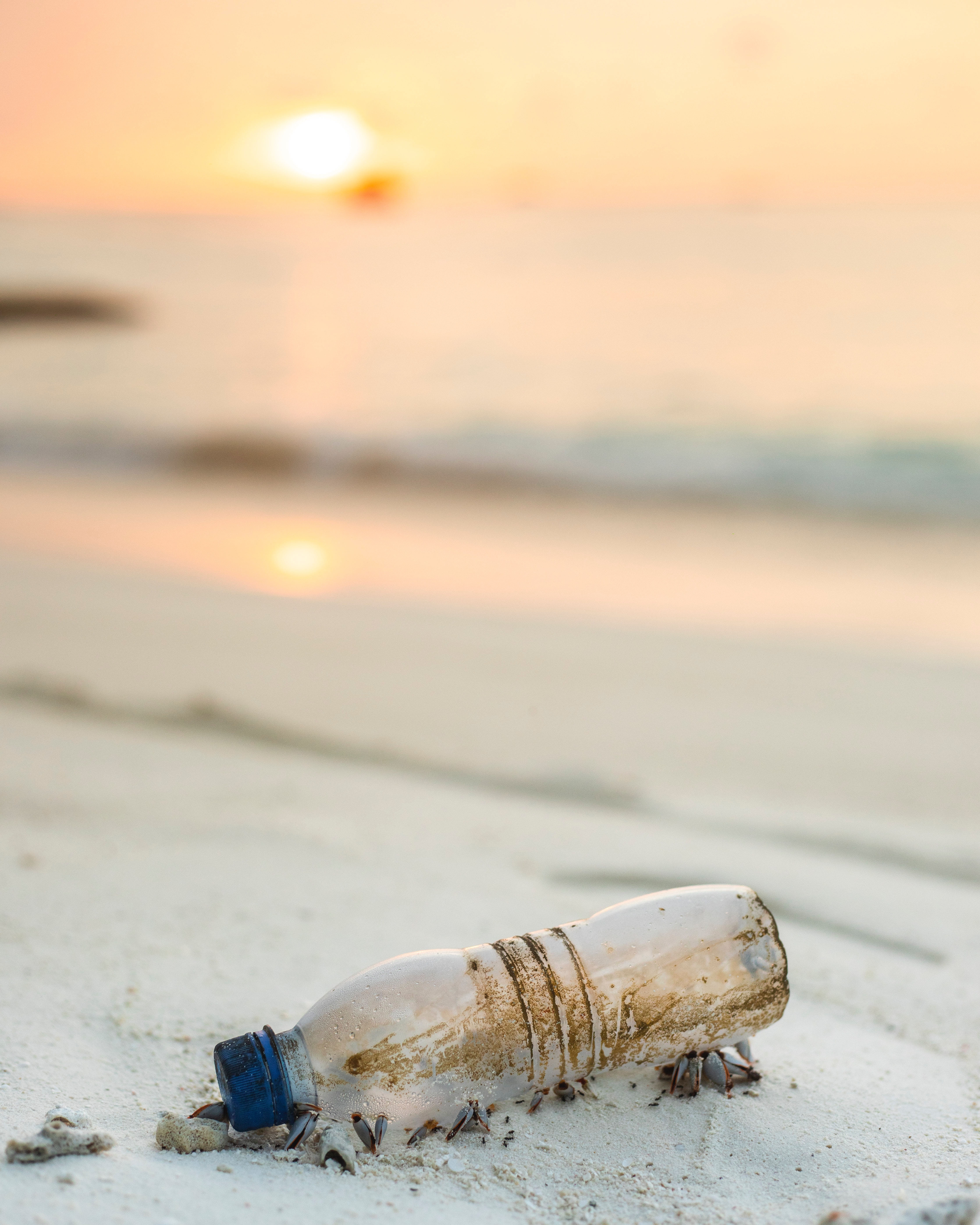
GOODBYE SINGLE-USE PLASTICS
In 2019, President Ibrahim Mohamed Solih announced a comprehensive phase-out of single-use plastic items in the Maldives at the United Nations General Assembly in New York. The most polluting single-use plastic items, such as small water bottles and single-use plastic bags, shall be phased out by 2023. In order to tackle the problem, the Government is implementing a series of ‘smart policies’ aimed at eradicating the most problematic plastics from the country, using policy interventions ranging from bans in hotels and resorts and taxes to new industry standards and guidelines. From the 1st of June 2022, all plastic straws, single-use plates, cutlery and stirrers, Styrofoam food boxes, betel nuts in plastic wrapping, 500ml or less PET beverage bottles, 250ml or less coffee cups, small plastic toiletry bottles, cotton buds with plastic stems and some plastic bag sizes are banned.
HARVESTING THE SUN
The Maldives has a net-zero target by 2030, one of the most ambitious targets for an island nation. Not an easy mission for the island state. Maldivians have enjoyed universal access to electricity only since 2008 and the heavy reliance on imported diesel and isolated island-based grids has driven up the costs of electricity generation. With the help from international organization, private investors and local initiatives the government launched several big scale solar, wind and marine power projects such as a five-megawatt solar project that will support the Maldives in moving closer towards its renewable energy targets, as part of the World Bank-funded Accelerating Sustainable Private Investments in Renewable Energy (ASPIRE) project. Another project proposed by the Government is one of the largest floating solar power plants in the world. A 36 megawatt floating solar PV hybrid system will provide power to the greater Male’ region.
And it doesn’t stop there. Renewable energy has also reached the tourism industry. Some of the most luxurious and exclusive resorts are entirely solar powered. Some of the most well known resorts include Kudadoo, Soneva Fushi and Ozen Life Maadhoo.
An enlightening journey is coming to an end. A trip that will undoubtedly change the way I think about vacations in the Maldives. But one question remains: If it takes a village to drive change and change to save our planet, why is it that only a handful of resorts pledge their future to save our planet?

 Byond Traveling